Showing posts with label trendingnews. Show all posts

Friday, December 27, 2019

Colleges start fundraising campaigns

Starting Off

Community College of Allegheny County has started a $65 million campaign with no end date. Efforts to build jobs will be a priority. Thus far $44 million has been raised. Oral Roberts University has started a three-year campaign to raise $75 million. Buildings and scholarships are the top goals. Editorial Tags: Fund-RaisingIs this diversity newsletter?: Newsletter Order: 0Disable left side advertisement?: Is this Career Advice newsletter?: Magazine treatment: Trending: Display Promo Box: 

Read more: insidehighered.com

https://infoforu.org/colleges-start-fundraising-campaigns/

Monday, December 23, 2019

Top 10 Trends in Digital Advertising in 2020

As we approach the “visionary” year of 2020, we took a look at what the New Year has in store for the digital advertising industry. Here are key things to watch out for as you plan ahead and finalize your marketing budgets.

1. Amazon Hits Its Stride

2019 was a phenomenal year for Amazon, supported by a record-breaking Prime Day and a highly successful back-to-school season. Brands have begun to understand the power of advertising on Amazon and the unique opportunity it offers to capture people at the beginning of their purchasing journey.

The Opportunity: Brands have flocked to Amazon for its revenue-generating ad capabilities. We expect this trend to continue in 2020 as Amazon refines its offering and advertiser use becomes more sophisticated. Experiment with sending more of your paid search traffic directly to Amazon as the offerings improve, like Amazon Attribution. Amazon is simply too good of an opportunity to miss.

2. Search Remains Strong and Flexes Its Gen Z Muscle

Paid search remains the dominant digital ad channel and as we look into next year we see no indication of this changing. Google retains the upper hand through constant innovation and releasing a number of sophisticated tools that help marketers target their customers more effectively.

The Opportunity: As we move into 2020, a key challenge for search advertisers is how to reach the Gen Z audience. It’s no surprise that mobile, specifically smartphones, will be a core part of this strategy.

Smartphone search usage continues to increase—more local search queries are now done on smartphones. Marin research shows that university students are truly the smartphone generation; with this in mind, advertisers that adopt a mobile-first approach to search can expect to reap rewards next year.

3. Despite Social Controversy, Instagram Remains Facebook’s Secret Weapon

In spite of an ongoing public image crisis, Facebook has continually published positive results throughout 2019, demonstrating that media backlash doesn’t necessarily equate to poor business performance. This growth is likely to continue into 2020 due to the roll-out of a number of new features such as Facebook Watch and Automatic Placements.

However, the real story is still the rise of Facebook’s secret weapon, Instagram. With more than 500 million people using Instagram Stories every day, there’s plenty of opportunity for advertisers to experiment with engaging creative.

The Opportunity: Instagram Explore Feed is expected to launch in the New Year. It’s a fairly new concept for advertisers, bringing more interest-based targeting to the platform. Explore Feed represents a great chance for advertisers to be part of what’s culturally relevant and trending while reaching new audiences looking to discover something new. Exciting times ahead!

4. The Meteoric Rise in eCommerce Advertising

One of the biggest stories of the year is the rapid growth in eCommerce advertising. According to Statista, it’s expected there’ll be more than 300 million U.S. online shoppers by 2023. Brands should identify ways of finding and engaging with the right shoppers—for example, understanding ad formats on different channels and the role they play in the customer journey.

The Opportunity: There are so many formats emerging—from Stories to shoppable posts—and each one is designed to reach audiences at specific points in the journey. Google Shopping Ads, for example, are designed to move buyers from the consideration phase to conversion.

Understanding these nuances, as well as how these various ad formats can work together in a cross-platform approach, can help marketers avoid a siloed strategy in 2020 and will propel the business in a competitive market.

5. Will 2020 See Visual/Voice Search Take Off?

Google, Facebook, and Amazon are the key players in the voice search game. According to Google, 20% of all searches are voice and 55% of households are expected to own smart speaker devices by 2022. We’ve seen a big push this year with voice technology developing at a rapid rate.

Visual search is also starting to take shape. On the one-year anniversary of Lens, Pinterest revealed that Pinterest users were carrying out more than 600 million visual searches every month with Lens, a 140% increase year-over-year. Google’s own visual search tool, Google Lens, has seen similar growth with images now returned for 19% of search queries on Google.

The Opportunity: As speech-recognition accuracy goes from 95% to 99%, we expect voice search especially to continue to see rapid growth in 2020. As Google’s SERP continues to evolve for a mobile world, 2020 will likely see more ad formats that incorporate a more robust visual offering than years past.

This visual component has already seen an impact in Shopping campaigns since Google expanded to Showcase Ads this year. And, with 62% of millennials wanting visual search over any other new technology, it seems natural that using an image to start a search will become the norm in the next 12 months. Take note!

6. Artificial Intelligence, Machine Learning, and Digital Advertising

The rise of ML/AI in advertising has had a profound impact on the industry over the last 12 months, opening up new doors and allowing marketers to deliver relevant and engaging ads to their customers. To optimize campaigns and truly drive performance, brands have a huge opportunity to leverage automated, AI-driven technologies that allow for more testing and ultimately smarter strategies.

The Opportunity: Data is what fuels AI/ML if you want to stay ahead of the competition it’s important for brands to realize the value of their own data—whether it’s from a CRM, product sales, or inventory. Marketers can be much more effective with their ad campaigns when they leverage both first- and third-party data. Using both categories of data allows them to be aggressive when they expect good returns, and to pull back when performance is dipping.

With the rise of responsive search ads, Google has empowered advertisers to test the capabilities of machine learning in their campaigns, reducing the need for traditional A/B testing. In order to deliver relevant and engaging ads to their customers, marketers will need to focus their time implementing machine learning and AI continue to transform advertising options.

But marketers should also be wary of this new technology and ensure that implementing it into campaigns is in the best interest of your audience. Many of these emerging technologies do not take into account your unique audience and the proprietary data you have in-house. Marketers can become frustrated with one-size-fits-all solutions, when their business would benefit from customized solutions, tailored to their specific needs. For instance, Smart Bidding offers limited visibility and control over the data being used, leading to a missed opportunity to maximize performance.

We expect AI and ML to continue to drive innovation forward in 2020, transforming search and social advertising by letting you tailor ads to individuals, with the goal of fully personalized ads just around the corner.

7. Digital Video Will Hit Fast Motion in 2020

Digital video ad spend continues to climb, according to the IAB’s 2019 Video Advertising Spend Report. Marketers report digital budgets have increased 25% year over year, with a whopping 75% in the Media and Entertainment category.

The Opportunity: Consumer viewing habits explain this spike in ad spend, and it’s clear that advertisers should go where their customers are. AI developments for content will allow for more personalization in digital video, meaning brands will be able to tailor video ads. Brands have more incentive than ever to reach users with immersive, personalized content.

8. CPC/CTR Keeps Evolving

According to Marin research, overall search click volume has grown 14% YoY with a big jump in ad clicks for healthcare (85%). The technology industry came in second, with a 25% increase. The most notable decrease in CPCs was for healthcare, which dropped 47% YoY and now sit at $0.61 for Q3 2019. Consumers are heading to the internet for their healthcare education, and marketers in the industry see this as an opportunity to further engage with patients.

The Opportunity: The update from Google AdWords to Google Ads brings many new features, including more automated and smart options, like Smart Campaigns, with new and updated tools integrated directly into the Google Marketing platform. These updates have great potential with the new features opening up possibilities for search advertisers.

9. CMOs Tackle Ad Fraud and “Fake Views”

According to a recent report, global ad fraud is predicted to cost an unprecedented $23bn this year. In May 2019, the ANA released a study reporting that advertisers are starting to break down the pervasive fraud that riddles the digital ad world. However, with losses still projected to total $5.8B due to bot fraud this year (only an 11% decline from 2017), advertisers have a long way to go before they’ll win this battle. This growth shows no sign of slowing down as we move into 2020—the amount of fraud will only increase.

The Opportunity: Unfortunately it’s not easy to win the battle against ad fraud. CMOs must keep abreast of the latest developments. Being up to date means you can be quick to react so they can choose the right strategies for tackling each issue. For instance, just as AI powered tools like contextual image recognition and text analysis are used to combat brand safety threats, using techniques like supply path optimization and relying less on open exchanges need to become a force of habit when tackling ad fraud.

10. Mobile Keeps the Digital Advertising Trophy

People are spending less time watching broadcast TV on an actual set and reading print newspapers, and digital media consumption is picking up the slack. Mobile is the main driver of this growth. Within mobile itself, daily time spent with media on smartphones will be the only category in our forecast to see persistent growth.

The Opportunity: Google recently introduced the launch of several new ad types that will be showing up on mobile devices. Google searches on mobile devices will include gallery ads that allow advertisers to display multiple images for users to swipe through.

Users will also begin to see ads in Google’s discover feed—the feed of news stories that are built into many Android home screens, inside the Google app, and on Google’s mobile homepage—though they’ll only appear in select locations for now. Brands that maximize these mobile tools will be the ones that succeed in 2020.

xNdzl5NlT0E

Read more: feedproxy.google.com

https://infoforu.org/top-10-trends-in-digital-advertising-in-2020/

What’s Trending with Millennials on Social Media

Most the of the time, brands are looking to target a certain subset of individuals on social. When it comes to millennials, brands have to be strategic as they differ from other generations and groups of people. Below we breakdown what’s trending with millennials on social media. 

1280x400-Webinar-Banner-Template-copy-1024x320.jpg Millennial Usage on Social

This generation is defined by being born between 1981-1996. They came of age during the Internet explosion and were raised with technology which means they understand constant connectivity. Millennials have an average of nine social media accounts and their social behaviors have become more purpose and entertainment driven rather than interacting with their networks. This generation is spending an average of almost four hours a day on their phones and desktops, therefore there is a great deal of opportunity to reach these millennials. 

Where to Find Millennials on Social

Though there are reports that Facebook numbers are declining and millennials are jumping off the platform, according to eMarketer, it is still the most popular network among this age group. Millennials are using Facebook for gaining insight into the latest news and researching products and services. There are still many active millennials on Facebook who utilize it to maintain their social circles. 

The next most popular network for millennials is Instagram. Instagram is the perfect storm of an app for millennials as it includes features that appeal to this group such as stories, native shopping and access to celebrities & influencers. The other most popular networks to millennials are Snapchat, Pinterest and Twitter, in that order.

How to Attract Millennials to Your Brand

There are various tactics your brand can take in order to draw millennials in. In terms of creating content, here’s what’s important to keep in mind: 

Develop a brand identityUtilize user-generated contentKeep it briefBe originalCreate entertainment value

When it comes to engaging with millennials on your social channels, ideas include:

Use emojis & gifsAdd an element of personalizationCreate positivity Provide an all-in-one experienceBe Authentic

For more about this group and how to bring them into your brand, watch our on-demand webinar about “What’s Trending with Millennials”. 

b4beeee4-f6e0-48fd-8090-3db33b85c7f9.png hbspt.cta.load(4551527, 'b4beeee4-f6e0-48fd-8090-3db33b85c7f9', );

The post What’s Trending with Millennials on Social Media appeared first on Ignite Social Media Agency.


Read more: ignitesocialmedia.com

https://infoforu.org/whats-trending-with-millennials-on-social-media/

Sunday, December 8, 2019

Justice League: #ReleaseTheSnyderCut Trends Worldwide

Justice-League-Warner-Bros.-on-FIRE.jpg

People are clamoring so loudly for the Snyder Cut release of Justice Leauge that the #ReleaseTheSnyderCut hashtag has been tweeted out over 60,000 times. Today has been an especially rough day for fans of Zack Snyder's original vision for Justice League, a vision which unfortunately was never released in theaters due to the director leaving the project for a family emergency. Now, however, it seems like a Synder Cut not only exists, but multiple people have seen it.

Recently, Jason Momoa showed an image of the climactic battle in Zack Snyder's cut of Justice League on his Instagram account, and the director himself has spoken at length in interviews about what would have happened differently during the film's final confrontation if he had still been around. With so much hints and rumors surrounding this alternate cut of what was ultimately a rather disappointing film, it's no surprise how popular the idea of a Snyder Cut which erases these issues has gotten.

Related: Justice League: Lex Luthor's Original Role In The Snyder Cut

So popular, in fact, #ReleaseTheSnyderCut is currently trending on Twitter, not just in the United States but worldwide, and at the time of this writing has been mentioned over 60,000 times. Partially due to Snyder releasing a new image of Barry Allen and partially due to Momoa's Instagram nudging, fans have been worked up into a frenzy over the potential for a Snyder Cut release, although neither the director nor Warner Bros. have confirmed if such a thing is even possible.

Justice-League-final-battle-Russia.jpg

If the company does decide to release a Snyder Cut of the Justice League movie to fans, it would probably be one of the highest-selling director's cuts of all time, at least judging by the amount of fervor which is whipped up every time the idea of a Snyder Cut is mentioned online. Although the original cut of the movie was critically lambasted for being both too dark in places and unnecessarily humorous in other, other DC television shows like Titans have proven Snyder's version of Superman may have been more legitimate than he originally appeared.

Whether or not a Snyder Cut of Justice League will ever get a wide release is still something of a mystery, but with the amount of teasing and hinting going on from the characters involved in the film's creation one can only surmise some type of announcement is coming soon. Otherwise, Justice League alums Zack Snyder, Jason Momoa, and others are simply getting people excited for something they can never have, and that would just be rude.

Next: Justice League: Zack Snyder's Cut Cast Darkseid's Servant Desaad


Read more: screenrant.com

https://infoforu.org/justice-league-releasethesnydercut-trends-worldwide/

Saturday, December 7, 2019

The 11 Best Social Media Dashboard Tools & Apps

When implementing your social media strategy, it's easy to realize that manually posting on multiple different websites, multiple times a day, isn't optimal for your busy schedule. But it's not easy to tell from a baseline or pricing page which tools are not only the best for efficiency but best for your business.

Instead of spending hours of extra research combing through all of your options and sitting through countless demos and free trials, we've compiled a list of the best social media dashboards that fit your budget and brand.

These social media dashboards are optimized for every type of SMB; whether you're a social media team or a party of one, these apps will help you accomplish your goals in a streamlined, efficient way.

1. Later Price: $9, $19, $29, $49 per month, and enterprise pricingWhy it's great: Instagram scheduling

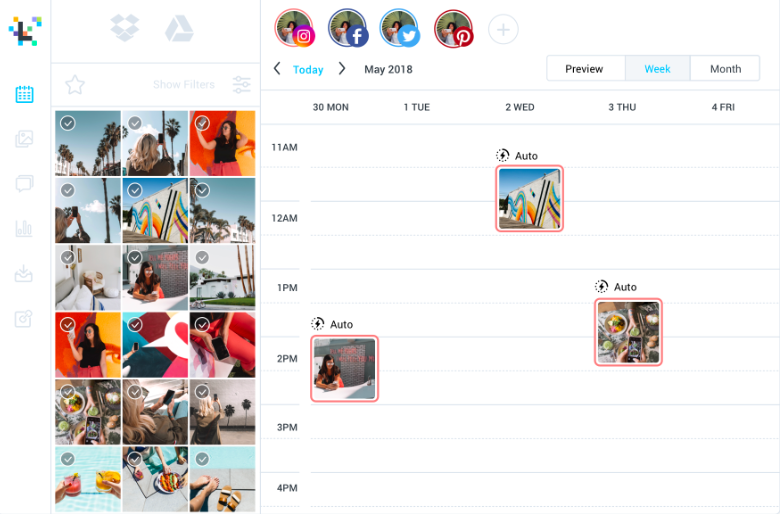
While you can connect Facebook, Twitter, and Pinterest profiles, Later is best for Instagram scheduling. This is because of its image-based content calendar scheduling, so you can see a bird's eye view of your brand in a monthly, visual format.

later%20scheduling%20example.png?width=780&name=later%20scheduling%20example.png

Image Source

Later is also an Instagram partner, which means it integrates with Instagram's API. This partnership means your account information will stay completely safe, which is important for Instagram Business accounts that have Shopping set up.

2. Sendible Price: $29, $99, $199, $299 per monthWhy it's great: Agency-based management

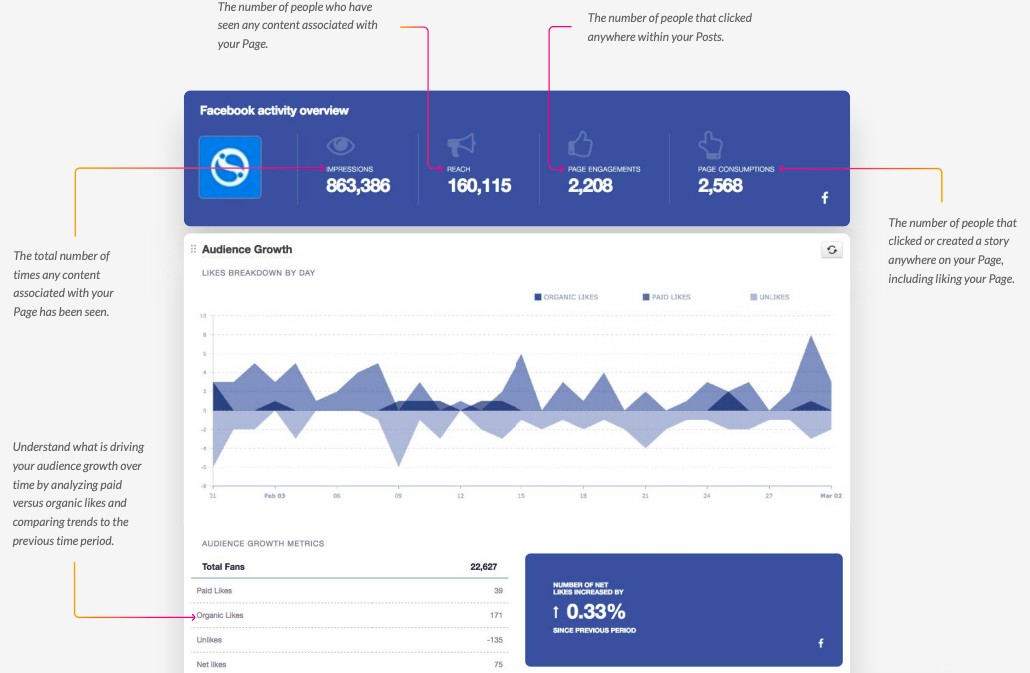
Are you a social media or marketing agency? Sendible may be the answer to unkempt management: it's a tool fit for an agency with clients. It helps you streamline how you manage brands and offers a couple unique features that help you succeed.

sendible%20report%20example.png?width=1030&name=sendible%20report%20example.png

Image Source

Sendible has a royalty-free image search tool and a Canva integration. Sendible also has social listening tools, a Reports function, scheduling, and post previews. To put it simply: this is a full dashboard and suite of tools to put your client accounts all in one place.

3. Tailwind Price: $9.99, $799.99 per month, and enterprise pricingWhy it's great: Pinterest and Instagram management

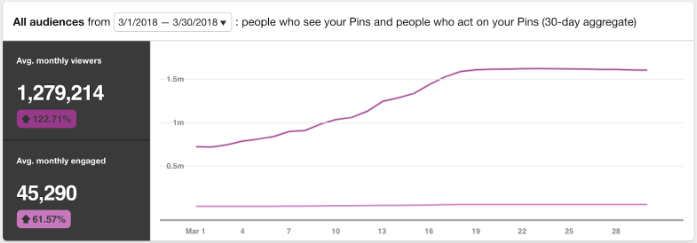
Tailwind is a very unique program, providing services for two apps normally not paired with each other: Pinterest and Instagram. It makes sense, however, considering both apps focus on visual multimedia. Offering a full media dashboard with scheduling, social listening, and analytics tools, Tailwind also has a few interesting program-specific services.

tailwind%20report%20example.png?width=697&name=tailwind%20report%20example.png

Image Source

First, it gives suggestions about how to improve Instagram and Pinterest performance. It also comes with a way to promote Pinterest content and manage Instagram user-generated content. If your brand is heavily focused on visuals, Tailwind may be right for you.

4. Sprout Social Price: $99, $149, and $249 per user per monthWhy it's great: Team-based management

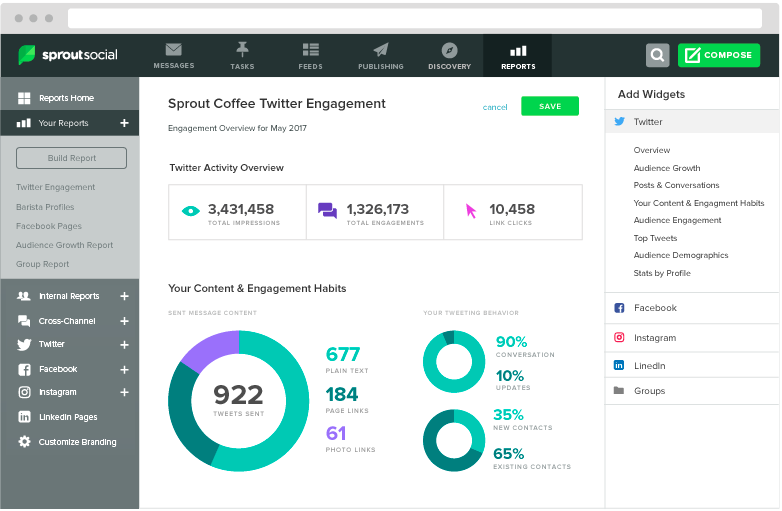
Sprout Social is a dashboard platform that's focused entirely on social media teams. What you get for your money is a full suite of tools, including options that allow you to create and schedule posts, social listening tools, and most of all: analytic data.

sprout%20social%20report%20example.png?width=782&name=sprout%20social%20report%20example.png

Image Source

The analytic tools are the shining star of Sprout Social. Expansive, in-depth reporting is available. If that's a focus for your brand, consider Sprout. They make the reports so professional and easy to read, there's no editing required.

5. MeetEdgar Price: $49/monthWhy it's great: 100% automated scheduling

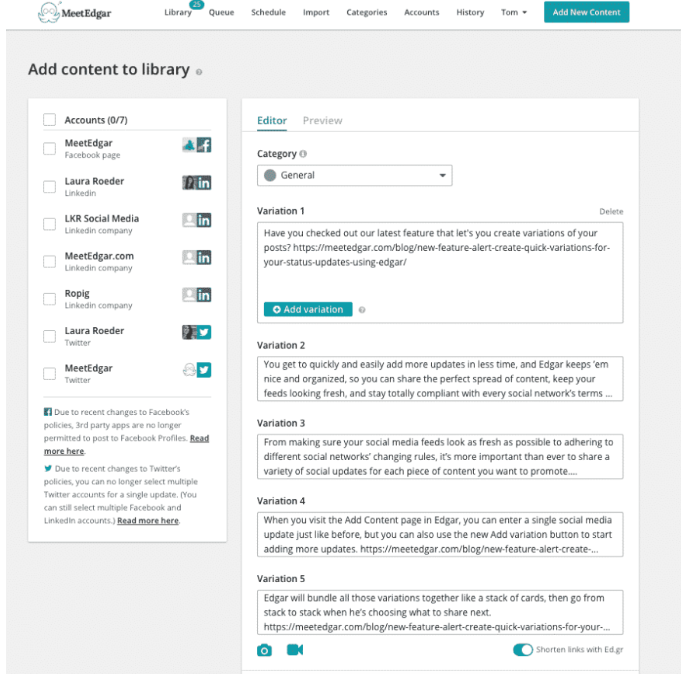
MeetEdgar is an app with a different approach to social media management, is. All users do is upload categorically-based content into their account and create time slots for when they want their account to post said content.

meetedgar%20category%20example.png?width=681&name=meetedgar%20category%20example.png

Image Source

Then, according to the time slots and categories, the app will schedule and upload content. If you want your Twitter account to post a meme at 11 AM on a Thursday, MeetEdgar would search through the "Meme" category of content you've already uploaded, schedule, and post it.

Managers might like this option, if they don't have enough time to constantly schedule and upload content. They can plug in their entire content calendar at the start of the month and remove the heavy lifting for the next few weeks.

Post-enhancing dashboards such as these three can take care of your social strategy without losing any of quality.

1. TweetDeck Price: FreeWhy it's great: Twitter dash management

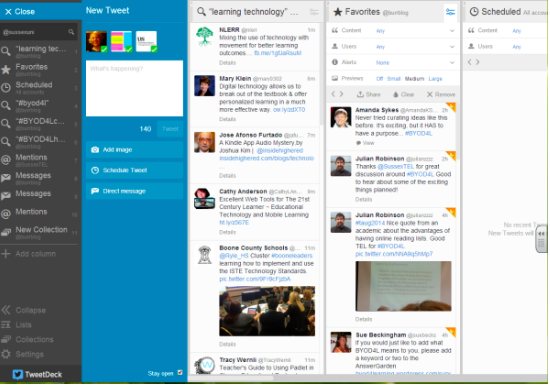
TweetDeck is amazing if you're tired of flipping back and forth through the different tabs on Twitter. It’s a free extension of twitter (no download required) that automatically gives you your account's Home, Notifications, Trending, and Messages in a dashboard view.

tweetdeck%20dsahboard%20example.png?width=550&name=tweetdeck%20dsahboard%20example.png

Image Source

This app is especially handy for posting quickly. You can engage with your Twitter in-app, and it feels like a much faster method of running your account than the in-browser functionality . Plus, TweetDeck automatically updates with any new notifications.

2. HubSpot Price: Free plan, or $50, $800, $3200/monthWhy it's great: All-in-one social media software

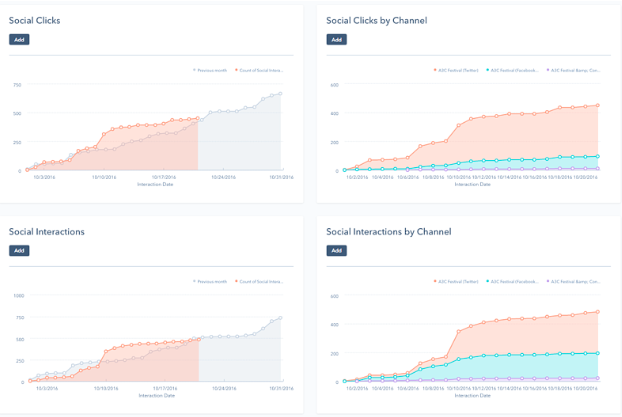
With HubSpot's social media management tool, you get an all-inclusive package. Connect up to 300 accounts and schedule up to 10,000 posts a month. Plus, for super in-depth planners, you can schedule posts up to 3 years in advance.

hubspot%20social%20media%20analytics%20example.png?width=622&name=hubspot%20social%20media%20analytics%20example.pngHubSpot's social media management features include monitoring mentions and engagement, and provides full analytic reports. You're able to schedule posts all in one place, without leaving the system.

3. TweetStats Price: FreeWhy it's great: Free basic Twitter analytics

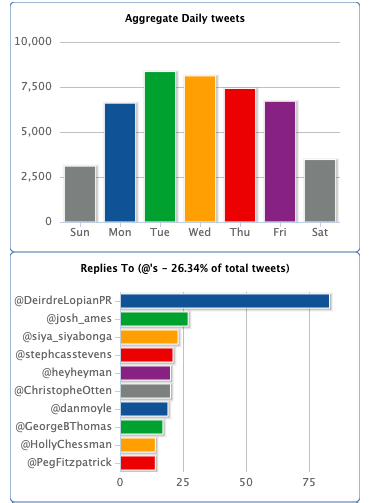
This little website is super handy if you don't have the budget to pay for analytic tools. TweetStats can give you the analytics of any Twitter account in about two minutes. The website displays graphs of when you've tweeted, the volume of tweets, time you usually tweet, and your most used words and hashtags.

tweetstats%20analytics%20example.png?width=370&name=tweetstats%20analytics%20example.png

Image Source

Using TweetStats is especially helpful if you want to view the ecosystem of your Twitter. Are you staying on-brand? Are you meeting your tweet goals? What hashtags can you elevate the use of?

4. TubeBuddy Price: Free plan, or $9, $19, $49 per month Why it's great: YouTube management

If you have a large YouTube presence, consider TubeBuddy. TubeBuddy offers a hefty suite of perks to present a full dashboard. Categories include video dashboard, video SEO, bulk processing, promotion, data & research, and productivity.

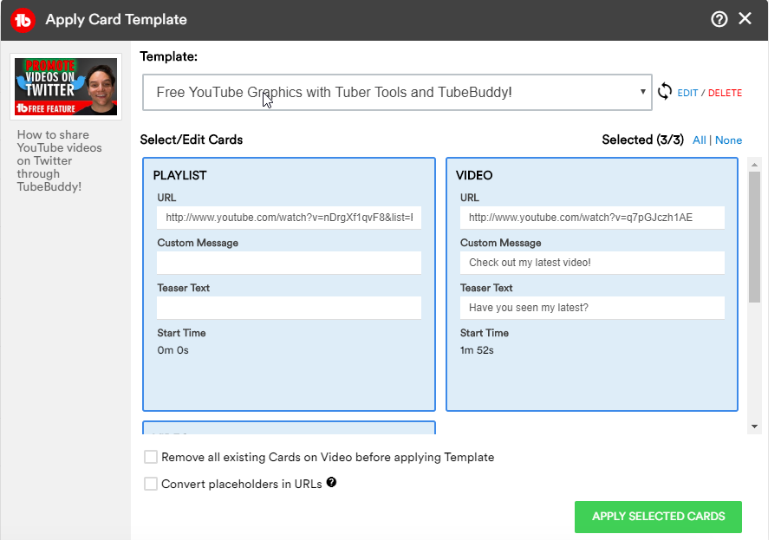
tubebuddy%20card%20template.png?width=769&name=tubebuddy%20card%20template.png

Image Source

The screenshot above features one of TubeBuddy's card template features. Card templates streamline the process of uploading and finalizing YouTube videos, making it easier to sort videos into a playlist on your channel.

You can install the program for free on Chrome, working sort of like an extension. The free plan gives you access to analytics, productivity, and SEO tools to get started. TubeBuddy is also a YouTube Partner and integrates with Alexa.

5. MavSocial Price: Free plan, or $19, $78, $199, $499 per month Why it's great: Visual-based streamlined management

This is a great post-enhancing tool. MavSocial has a focus on visual-based management, and as such, offers unique perks, like editing multimedia content and a stock photo digital library. With the editing tools, you can add filters to your photos, crop, and search for royalty-free images.

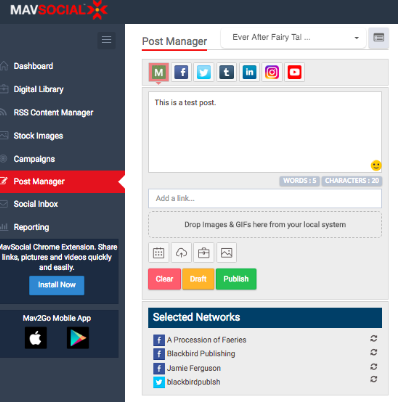
mavsocial%20dashboard%20example.png?width=400&name=mavsocial%20dashboard%20example.png

Image Source

On top of all of this, MavSocial has a full dashboard suite, meaning you can schedule content and engage with followers. MavSocial supports YouTube, Facebook, Twitter, and Instagram. The app is also an Instagram Partner.

6. Hootsuite Price: Free plan, $29, $129, $599 per monthWhy it's great: All-in-one social media management

Hootsuite is a popular social media tool and boasts over 15 million users. The free plan lets you add three social accounts from different platforms on one screen and has a limit on how many posts are available to make.

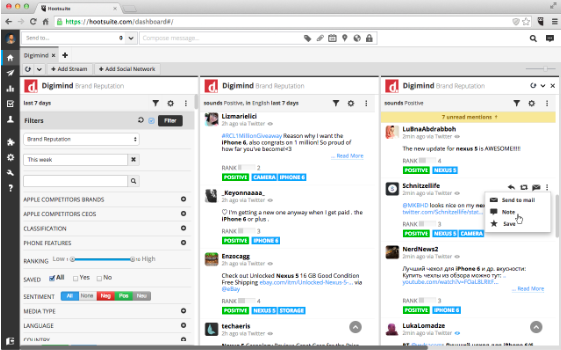
hootsuite%20dashboard%20example.png?width=561&name=hootsuite%20dashboard%20example.png

Image Source

While user-friendly, Hootsuite is an expansive app. You can create ads, running an ROI report on those ads, and also has options to schedule and create posts. Note that you can only post on your Instagram using the scheduler, if you have an Instagram Business account.

Every business is unique, and so is every social media dashboard. Because of that, finding the best fit can be daunting. Covering all your bases can be simplified with a social media dashboard, as well as building a community and social presence.

If you want to take a crack at building your own content calendar that'll help you plan your social media posts, check out our article here.

__ptq.gif?a=53&k=14&r=https%3A%2F%2Fblog.hubspot.com%2Fmarketing%2Fsocial-media-dashboard-tools&bu=https%253A%252F%252Fblog.hubspot.com%252Fmarketing&bvt=rss

Read more: blog.hubspot.com

https://infoforu.org/the-11-best-social-media-dashboard-tools-apps-2/

The 11 Best Social Media Dashboard Tools & Apps

When implementing your social media strategy, it's easy to realize that manually posting on multiple different websites, multiple times a day, isn't optimal for your busy schedule. But it's not easy to tell from a baseline or pricing page which tools are not only the best for efficiency but best for your business.

Instead of spending hours of extra research combing through all of your options and sitting through countless demos and free trials, we've compiled a list of the best social media dashboards that fit your budget and brand.

These social media dashboards are optimized for every type of SMB; whether you're a social media team or a party of one, these apps will help you accomplish your goals in a streamlined, efficient way.

1. Later Price: $9, $19, $29, $49 per month, and enterprise pricingWhy it's great: Instagram scheduling

While you can connect Facebook, Twitter, and Pinterest profiles, Later is best for Instagram scheduling. This is because of its image-based content calendar scheduling, so you can see a bird's eye view of your brand in a monthly, visual format.

later%20scheduling%20example.png?width=780&name=later%20scheduling%20example.png

Image Source

Later is also an Instagram partner, which means it integrates with Instagram's API. This partnership means your account information will stay completely safe, which is important for Instagram Business accounts that have Shopping set up.

2. Sendible Price: $29, $99, $199, $299 per monthWhy it's great: Agency-based management

Are you a social media or marketing agency? Sendible may be the answer to unkempt management: it's a tool fit for an agency with clients. It helps you streamline how you manage brands and offers a couple unique features that help you succeed.

sendible%20report%20example.png?width=1030&name=sendible%20report%20example.png

Image Source

Sendible has a royalty-free image search tool and a Canva integration. Sendible also has social listening tools, a Reports function, scheduling, and post previews. To put it simply: this is a full dashboard and suite of tools to put your client accounts all in one place.

3. Tailwind Price: $9.99, $799.99 per month, and enterprise pricingWhy it's great: Pinterest and Instagram management

Tailwind is a very unique program, providing services for two apps normally not paired with each other: Pinterest and Instagram. It makes sense, however, considering both apps focus on visual multimedia. Offering a full media dashboard with scheduling, social listening, and analytics tools, Tailwind also has a few interesting program-specific services.

tailwind%20report%20example.png?width=697&name=tailwind%20report%20example.png

Image Source

First, it gives suggestions about how to improve Instagram and Pinterest performance. It also comes with a way to promote Pinterest content and manage Instagram user-generated content. If your brand is heavily focused on visuals, Tailwind may be right for you.

4. Sprout Social Price: $99, $149, and $249 per user per monthWhy it's great: Team-based management

Sprout Social is a dashboard platform that's focused entirely on social media teams. What you get for your money is a full suite of tools, including options that allow you to create and schedule posts, social listening tools, and most of all: analytic data.

sprout%20social%20report%20example.png?width=782&name=sprout%20social%20report%20example.png

Image Source

The analytic tools are the shining star of Sprout Social. Expansive, in-depth reporting is available. If that's a focus for your brand, consider Sprout. They make the reports so professional and easy to read, there's no editing required.

5. MeetEdgar Price: $49/monthWhy it's great: 100% automated scheduling

MeetEdgar is an app with a different approach to social media management, is. All users do is upload categorically-based content into their account and create time slots for when they want their account to post said content.

meetedgar%20category%20example.png?width=681&name=meetedgar%20category%20example.png

Image Source

Then, according to the time slots and categories, the app will schedule and upload content. If you want your Twitter account to post a meme at 11 AM on a Thursday, MeetEdgar would search through the "Meme" category of content you've already uploaded, schedule, and post it.

Managers might like this option, if they don't have enough time to constantly schedule and upload content. They can plug in their entire content calendar at the start of the month and remove the heavy lifting for the next few weeks.

Post-enhancing dashboards such as these three can take care of your social strategy without losing any of quality.

1. TweetDeck Price: FreeWhy it's great: Twitter dash management

TweetDeck is amazing if you're tired of flipping back and forth through the different tabs on Twitter. It’s a free extension of twitter (no download required) that automatically gives you your account's Home, Notifications, Trending, and Messages in a dashboard view.

tweetdeck%20dsahboard%20example.png?width=550&name=tweetdeck%20dsahboard%20example.png

Image Source

This app is especially handy for posting quickly. You can engage with your Twitter in-app, and it feels like a much faster method of running your account than the in-browser functionality . Plus, TweetDeck automatically updates with any new notifications.

2. HubSpot Price: Free plan, or $50, $800, $3200/monthWhy it's great: All-in-one social media software

With HubSpot's social media management tool, you get an all-inclusive package. Connect up to 300 accounts and schedule up to 10,000 posts a month. Plus, for super in-depth planners, you can schedule posts up to 3 years in advance.

hubspot%20social%20media%20analytics%20example.png?width=622&name=hubspot%20social%20media%20analytics%20example.pngHubSpot's social media management features include monitoring mentions and engagement, and provides full analytic reports. You're able to schedule posts all in one place, without leaving the system.

3. TweetStats Price: FreeWhy it's great: Free basic Twitter analytics

This little website is super handy if you don't have the budget to pay for analytic tools. TweetStats can give you the analytics of any Twitter account in about two minutes. The website displays graphs of when you've tweeted, the volume of tweets, time you usually tweet, and your most used words and hashtags.

tweetstats%20analytics%20example.png?width=370&name=tweetstats%20analytics%20example.png

Image Source

Using TweetStats is especially helpful if you want to view the ecosystem of your Twitter. Are you staying on-brand? Are you meeting your tweet goals? What hashtags can you elevate the use of?

4. TubeBuddy Price: Free plan, or $9, $19, $49 per month Why it's great: YouTube management

If you have a large YouTube presence, consider TubeBuddy. TubeBuddy offers a hefty suite of perks to present a full dashboard. Categories include video dashboard, video SEO, bulk processing, promotion, data & research, and productivity.

tubebuddy%20card%20template.png?width=769&name=tubebuddy%20card%20template.png

Image Source

The screenshot above features one of TubeBuddy's card template features. Card templates streamline the process of uploading and finalizing YouTube videos, making it easier to sort videos into a playlist on your channel.

You can install the program for free on Chrome, working sort of like an extension. The free plan gives you access to analytics, productivity, and SEO tools to get started. TubeBuddy is also a YouTube Partner and integrates with Alexa.

5. MavSocial Price: Free plan, or $19, $78, $199, $499 per month Why it's great: Visual-based streamlined management

This is a great post-enhancing tool. MavSocial has a focus on visual-based management, and as such, offers unique perks, like editing multimedia content and a stock photo digital library. With the editing tools, you can add filters to your photos, crop, and search for royalty-free images.

mavsocial%20dashboard%20example.png?width=400&name=mavsocial%20dashboard%20example.png

Image Source

On top of all of this, MavSocial has a full dashboard suite, meaning you can schedule content and engage with followers. MavSocial supports YouTube, Facebook, Twitter, and Instagram. The app is also an Instagram Partner.

6. Hootsuite Price: Free plan, $29, $129, $599 per monthWhy it's great: All-in-one social media management

Hootsuite is a popular social media tool and boasts over 15 million users. The free plan lets you add three social accounts from different platforms on one screen and has a limit on how many posts are available to make.

hootsuite%20dashboard%20example.png?width=561&name=hootsuite%20dashboard%20example.png

Image Source

While user-friendly, Hootsuite is an expansive app. You can create ads, running an ROI report on those ads, and also has options to schedule and create posts. Note that you can only post on your Instagram using the scheduler, if you have an Instagram Business account.

Every business is unique, and so is every social media dashboard. Because of that, finding the best fit can be daunting. Covering all your bases can be simplified with a social media dashboard, as well as building a community and social presence.

If you want to take a crack at building your own content calendar that'll help you plan your social media posts, check out our article here.

__ptq.gif?a=53&k=14&r=https%3A%2F%2Fblog.hubspot.com%2Fmarketing%2Fsocial-media-dashboard-tools&bu=https%253A%252F%252Fblog.hubspot.com%252Fmarketing&bvt=rss

Read more: blog.hubspot.com

https://infoforu.org/the-11-best-social-media-dashboard-tools-apps/

Friday, December 6, 2019

Education Department calls Grand Canyon a for-profit, raising questions about conversion bids

Grand Canyon University announced last year that had succeeded in its second bid to convert from a for-profit to a nonprofit institution, winning almost all of the needed approvals. But the one exception -- the Trump administration’s Education Department -- has ruled to the contrary.

The surprising decision by the department, announced Wednesday by the university’s for-profit holding company and first reported by Education Dive, raises questions about ongoing efforts by other for-profit colleges to change their tax status.

Grand Canyon said Wednesday that it will challenge the department’s move to treat it as a for-profit under federal aid laws.

“Holy shit,” Trace Urdan, a managing director at Tyton Partners and an expert on the for-profit higher education sector, said of the news. He said numerous other for-profits are considering or working on converting, and that the department’s decision may make those colleges reconsider the change.

The Phoenix-based Grand Canyon is one of the nation’s largest universities, enrolling 105,000 students in its thriving online and campus-based programs. The Christian institution enrolls more than 20,000 students at its campus in Phoenix, where it has spent over $1 billion on capital improvements over the last decade.

Yet the university for at least five years has sought a “level playing field” with nonprofits and to drop the “stigma” of being a for-profit. The conversion has allowed Grand Canyon to bulk up its research capacity, receive philanthropic donations and participate in NCAA governance at the Division I level.

The Higher Learning Commission in 2016 rejected the university’s first conversion bid.

Grand Canyon had proposed a structure where the nonprofit university would outsource many of its administrative functions to a separate for-profit services corporation. That arrangement was similar to several smaller for-profits that had made the conversion. It also in some ways looked like Purdue University Global, a boundary-testing nonprofit that later was created by the acquisition by Purdue of Kaplan University, a large for-profit chain.

HLC, however, decided that too much of Grand Canyon’s academic operations would be operated by the for-profit division.

The accreditor later changed its guidelines on outsourcing, and Grand Canyon tried again.

The university has argued that both attempts were not about avoiding regulations that are specific to for-profits.

“GCU fully exceeds all of those regulatory measures,” a university spokesman said Wednesday in a written statement, noting that none of the university’s programs would have failed the Obama-era gainful-employment rule; that it gets 72 percent of its revenue from federal sources, well below the 90 percent federal threshold; and that its student loan default rate is 5.6 percent, which is also substantially lower than the national average.

Sixteen-Month Wait

In July 2018, Grand Canyon celebrated earning approval from the Higher Learning Commission and its state regulatory agency in Arizona. The IRS also signed off on the university arm operating as a nonprofit 501(c)(3) organization.

The resulting structure was like the one Grand Canyon previously proposed.

Its publicly traded owner, now dubbed Grand Canyon Education, sold the campus and academic operations for $870 million to the new, nonprofit Grand Canyon University. Under a 15-year contract, Grand Canyon Education provides a wide range of outsourced support services to the university in exchange for 60 percent of its tuition and revenue.

“The structure behind the scenes will change, but our goals and mission remain the same -- to provide high-quality Christian education that is affordable to all socioeconomic classes of Americans,” Brian Mueller, Grand Canyon Education's CEO, said at the time.

However, some critics took issue with the new nonprofit and its relationship with the for-profit holding company. One reason is that Mueller presides over both entities, which critics call a conflict of interest.

The holding company later bought Orbis Education, an online program management company, to expand its online offerings with other university partners. Grand Canyon Education said Wednesday that the OPM division now works with 20 other colleges, providing support for online programs that enroll 3,100 students.

When Grand Canyon announced its successful conversion, however, it noted that the Education Department had not yet responded to a requested sign-off on the transaction, called a “pre-acquisition review.”

Yet observers seemed to think that the deregulation-minded Trump administration would back the move, as it did with Purdue and others. Some said this administration was providing a window for nonprofit conversions, while the sector worries about what might happen under the next Democratic administration.

For example, Senator Elizabeth Warren, the Massachusetts Democrat who is seeking her party’s presidential nomination, has called for all for-profits to lose federal aid eligibility.

Yet after waiting 16 months on the decision, Grand Canyon said it heard Wednesday from the department that it got a thumbs-down on the conversion.

Mueller made the announcement during a quarterly earnings call.

“While we have not yet had a full opportunity to review this letter and the department’s reasoning, we do believe that Grand Canyon University meets all the requirements to be treated as a nonprofit entity for Title IV, HEA program purposes and we would expect that the university will initiate appropriate measures to challenge this decision,” Mueller said, according to a transcript of the call with investors.

Grand Canyon said the department had approved the transaction to sell its academic operation to the entity created last year. And the provisional Program Participation Agreement from the feds did not include restrictions such as a letter of credit or limit on growth, the company said.

“Since we just received this information within the last hour, you can appreciate that we need further time to digest it and to discuss it with our client,” Mueller said. “We expect to make a further statement once we have a chance to do so.”

Urdan said Grand Canyon University is in a strong enough position to ride out the bad news, which is likely to hurt its share price today. “The whole reason for doing this was to the lift the weight of the brand,” he said.

But the department’s decision will keep higher education lawyers busy, both for the university and others looking at a nonprofit conversion.

“What do you make of Purdue? Why is that OK?” he said. “How is the department making that distinction?”

For-Profit Higher EdEditorial Tags: Federal policyEducation DepartmentFor-profit collegesImage Source: Grand Canyon UniversityIs this diversity newsletter?: Newsletter Order: 0Disable left side advertisement?: Is this Career Advice newsletter?: Magazine treatment: Trending: College: Grand Canyon UniversityDisplay Promo Box: 

Read more: insidehighered.com

https://infoforu.org/education-department-calls-grand-canyon-a-for-profit-raising-questions-about-conversion-bids/

Thursday, December 5, 2019

Rumor: Galaxy S11 could really amp up battery size next year

samsung-galaxy-s10e-hands-on-2-840x473.jpg

It’s November, which means it’s time to start talking about the Next Big Thing from Samsung.

There are already a few small Galaxy S11 tidbits making the rounds, including a possible codename: Hubble. But today we have something a little more palpable – the likely battery capacity of the Galaxy S11e, the smallest of the expected trio of new flagships from Samsung.

The folks over at GalaxyClub unearthed a listing on the website of Korean safety watchdog SafetyKorea, showing a battery with model number EB-BG980ABY. Following Samsung’s numbering convention, Galaxy S11 devices are likely to bear model numbers beginning with “98.” For reference, the Galaxy S10e has the code SM-G970, the Galaxy S10 SM-G973, and the Galaxy S10 Plus, SM-G975. It follows that this battery will likely be found in the Galaxy S11e.

The listing contains an image, which is rather low-res, but does hold a few clues. You can just about make out the rated and typical capacities, though the figures are too small to confidently read. The rated capacity appears to be in the 3,700mAh range, while the typical capacity appears to be 4,000mAh.

samsung-galaxy-s11e-battery-leak.jpg

These are guesses based on the blurry pic, but one value is more clearly readable – 14.36Wh, which, divided by the 3.85V voltage of previous batteries in Samsung flagships, would give a value of 3,730mAh for the typical battery capacity.

Noted Chinese leaker Ice Universe threw his weight behind GalaxyClub’s detective work.

The S11e battery capacity may reach 4000mAh. From the battery shape, the S11e battery is close to square, which is completely different from the S10e long battery, but similar to the Note10 battery, which means that the S11e internal motherboard design changes. pic.twitter.com/SvoBT3AZXu

— Ice universe (@UniverseIce) November 7, 2019

Ice Universe notes that the battery has a new form factor that’s more similar to the Note 10 Plus’, rather than the Galaxy S10e’. That means the S11e could bring significant hardware changes compared to this year’s model.

If the Galaxy S11e does indeed have a battery rated at 3,700mAh-4,000mAh, we can be very optimistic for the capacities of the Galaxy S11 and Galaxy S11 Plus. These larger devices could accommodate batteries that are closer to 4,500mAh or even higher.

For reference, the Galaxy S10e has a 3,100mAh battery, the Galaxy S10 3,400mAh, and the Galaxy S10 Plus 4,100mAh.

Larger, denser batteries are an essential selling point for modern flagships – Google Pixel 4 XL aside. Huawei packs a 4,500mAh unit on the Mate 30 Pro, and even Apple, long seen as a laggard when it comes to raw specs, put a 3,970mAh battery on the iPhone 11 Pro Max.

Samsung is no stranger to beefy batteries. The Galaxy M30s, for instance, hits a whopping 6,000mAh.

There’s also a chance that Samsung will make the Galaxy S11e larger, rather than keeping the same form factor as this year. The industry is still trending towards bigger screens, so that shouldn’t come as a shock, though fans of compact designs will surely cry foul.

A likely explanation for this big bump in battery capacities is the coming – in earnest this time – of 5G. The new-fangled standard is known to have brutal battery consumption, all but forcing manufacturers to push the envelope of battery dimensions.


Read more: androidauthority.com

https://infoforu.org/rumor-galaxy-s11-could-really-amp-up-battery-size-next-year/

How to Use Dynamic Content to Skyrocket Email Engagement

We’re living in a world where customers want to be treated as individuals rather than just names in a database.

According to Salesforce, 84% of customers say that being treated like a person, not a number, is key to winning their business.

image-1.png?resize=720%2C393&ssl=1

And 70% of those customers view contextualized engagement, based on earlier interactions, as very important.

Companies like Amazon, Netflix, and Spotify, have leveraged the power of personalization to spur rapid growth and increase user retention. For a long time, personalization at scale could only be done by large companies with the resources to handle the technical challenges.

Times have changed, as anyone can now create personalized experiences for their customers without spending a fortune.

What is dynamic content?

Dynamic content describes any web-based content that changes based on user data, preferences, and behaviors. This data is largely supplied by the user, who provides and then consents to its use.

When most people think of personalization in email marketing, merge-tags or subscriber segmentation comes to mind.

Dynamic content can do so much more than that. It’s not just limited to tags and segments. With dynamic content, you can customize every aspect of an email to target a particular user.

Everything from a user’s interests, gender, purchase history, and even geography can be used to personalize an email.

Take this email from Clubhouse as an example:

image-2.png?resize=720%2C1379&ssl=1

This was sent out as a single email, but it renders differently for each user based on the data Clubhouse has on them. So no two users will see the same thing.

It isn’t possible to create such an email using traditional personalization methods. Dynamic content is at play here, and here’s why you should be using it for your email campaigns.

Benefits of dynamic content

1. It creates better customer experiences: Dynamic content lets you create custom experiences for your customers, in a way that traditional personalization techniques simply can’t. You can customize email content depending on what your users bought last, where they live, and even offer them discounts based on how long they’ve been a customer.

2. It leads to higher engagement and conversion rates: People are more likely to interact with your messages if they feel like it was made for them. Personalized email campaigns have, on average, 29% higher unique open rates and 41% unique click rates than non-personalized ones.

It’s no wonder that 65% of marketing executives cite dynamic content in email marketing as the most effective personalization tactic.

3. It saves time: With traditional email personalization methods, creating relevant experiences involves creating more segments. And including more customer data requires you to shape data with SQL and multiple CSV exports/imports.

And these traditional personalization tactics can get really complex, as your messaging becomes more personalized.

Dynamic content lets you create a single template that you can configure by inserting dynamic blocks that change based on user data.

In essence, dynamic content saves time, increases engagement, and improves customer experience. All of which reflects positively on the growth and profitability of your business.

Using dynamic content in your email campaign

Just because you’re creating dynamic emails doesn’t mean that you should just fill in user data wherever possible. Instead, consider what aspects of an email would add value to a user.

How can you use existing customer information to create relevant experiences for them?

When it comes to dynamic email content, the level of integration can move from simple to complex depending on how much personalization you want.

We group these under three levels of depth:

Level 1. Basic customer merge tags:

This involves using merge tags in your email content. Merge tags are placeholders replaced by actual content when the email is sent.

With merge tags, for example:

Hey user.name!

…becomes…

"Hey Alex!"

Like this email from About.me for example:

zstV49ePBTkSUfFXNOpF2bWSrngwZkKasL61BUQP7lx0bq0XeJtjqnvPvby_AqdKGlDm5MGZU0gbqyt2ko1i_w7_LKEjfHE2Zqn5EcrQXj6y7netNzzbG5smA9a4ba6pDVfbX00h

Merge tags are easy to implement, but are the barest minimum of what you can do with dynamic content.

Level 2: Collect and insert on-site data:

Merge tags can only get you so far. To create a truly personalized experience, you’re going to need more than just the name of your user.

Collecting data usually requires you to connect to an API so you can pass that data from your website or app into your email service provider (ESP). This allows you to track events and properties in real-time as users browse your site, app, or store.

Based on that data, you can then create dynamic content when messaging the user. At Vero, we use the Liquid Templating language to handle these dynamic content blocks.

An abandoned cart email is a great example of using on-site activity to personalize emails.

Here’s one from Huckberry:

bD18r490CiFEb_ugfMCAv3gSCXld3XspBgPfG_XIRgjSY0XVnlmB33LqES7Wz9H8UadfEwhFipQswTsHDCJPTNhDnKqbItUy1a8xRbn2IrO1qiN9BHT9P7EcKmSm4rtIzEQnOwHl

In this case, an event was tracked on the store – Added to cart – with an event attribute that is an array of all the items in the cart – including, for example, a 6″ Service Boot.

An email is then triggered by the event – Send after 24 hours of inactivity – while the event attribute is used to populate the product field.

The result? After adding an item to cart, the user gets an email 24 hours later reminding them to complete the transaction. As SalesCycle points out, 28.2% of emails clicked will lead to a recovered sale, so this is a great way to reign a customer back in.

Level 3: Pull data from your own database

Sometimes the data you want to use changes in the period since it was tracked. Or it isn’t available in real-time as the customer browses your site.

That’s where Level 3 comes in, and it’s a game-changer. By connecting external APIs to your ESP, you can take dynamic content and email personalization to a new level. To explain how it works, I’ll use a real customer example:

Uniplaces is a marketplace for students to book accommodations, and for landlords to find tenants. When a user signs up and begins searching for a house or apartment, Uniplaces tracks events and event properties related to their search, that allow them to send impressive email campaigns later.

Here’s how it works in detail:

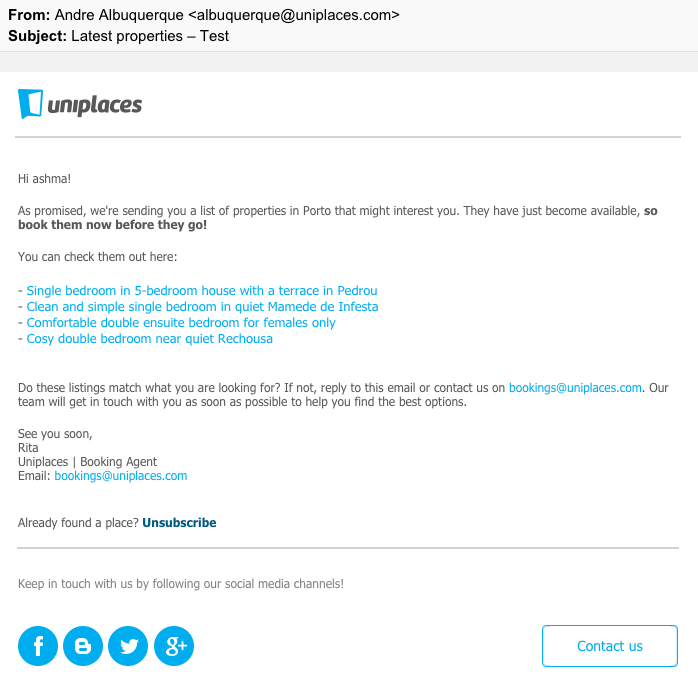
When a logged-in user views a listing, Uniplaces records an event – View listing – and an event property – event.city. If the user fails to complete the next event – Complete booking – Uniplaces sends an email with suggested listings.

Here’s that email:
VVRGfjrsf0RMAsn92gfSe2tt88NOfB9eyC1CPYlJjZTBf5tgorl1cm0m7tD2-j8J9rV8zSa13Jv-tCZQqsbaVnAgEAcmqH8M9qzjPS4uz8cOELpo_fdlhn2CETk2C8FqEJwUskdb

The four suggested apartment links in the user’s target city are inserted dynamically. Then, regardless of the city, the email will be personalized with relevant listings.

Uniplaces only has to create this email once, and can use it to provide personalized recommendations to thousands of customers. That’s the beauty of dynamic emails.

We’ve covered what dynamic content is and the different ways you can include it in your email marketing. Now we’re going to go over examples from companies that are using dynamic content really well.

Inspirational dynamic content 1. SUITENESS

This email from SUITENESS is a great example of how you can create great experiences for your customers with dynamic email content:

image-6.png?resize=720%2C1261&ssl=1

SUITENESS used a past event relevant to the user, when they first planned a trip to Chicago 2 years ago, to remind them of how long they’ve been a customer. They then used that as an opportunity to reward them with free credits as they planned their next trip.

2. GasBuddy

This email from GasBuddy is an example of how personalized an email can be with dynamic content:

image-7.png?resize=720%2C1261&ssl=1

GasBuddy shows how fuel efficient you are, compared with other drivers in your area. It also tells you your average speed, how often you’re speeding, and offers tips for improvement.

This ultra-personalized email feels like it was meant just for you, because it’s designed that way. Dynamic content makes it possible to create messaging that’s feels personal, even if it’s happening at scale.

3. RITUAL

Ritual helps teams save time by ordering ahead and skipping long lunch line-ups. Ritual is made for teams, and their email reflects this:

image-8.png?resize=720%2C1552&ssl=1

They tell you about restaurants trending in your area, where your coworkers are buying lunch, and even lets you know who picked up the most food for everyone in the office. This email offers a lot of useful information and is made possible by dynamic content.

4. Uniqlo

We’ve talked about how abandoned cart emails are a great example of using events to create dynamic emails. Uniqlo takes things a step further. Their store also tracks when a user likes an item, even if they don’t add it to the cart.

Uniqlo then uses that data to send relevant offers at a later date. For example, here’s an email they sent after an item a user liked had a price drop:

image-9.png?resize=720%2C1552&ssl=1

Uniqlo, like every company on this list, understands that great emails aren’t just about personalization but providing value at every interaction.

The way forward

Email marketing has one of the highest ROI of any marketing channels, and personalization is a huge contributor to that.

Customers want to be treated as people, not numbers, and dynamic email content can help you create amazing personalized experiences at scale.

The post How to Use Dynamic Content to Skyrocket Email Engagement appeared first on Vero.


Read more: getvero.com

https://infoforu.org/how-to-use-dynamic-content-to-skyrocket-email-engagement/

Wednesday, December 4, 2019

Queen Elizabeth is very much alive—despite what you may have read on Twitter

queen-england-798x400.jpg

Last night, Twitter was sent into a Royal Family frenzy after an unknown person going by Gibbo in a group chat told his mates that the Queen of England had died. Though the Queen’s continued survival was reported first thing in the morning by a Buckingham Palace spokesperson, this came far too late to stop Queen, #thequeenisdead, Buckingham Palace, Prince Charles, and other Royal Family keywords from trending all night long.

Apparently the queen is dead. pic.twitter.com/quYoizOwlh

— Swanny (@Swanny532) December 1, 2019

I see we have reached that time of year where I have to dispel rumours of HM's passing.

The Queen is not dead. She is alive & well and is very much looking forward to hosting President Trump and other world leaders at Buckingham Palace on Tuesday for the NATO reception.

— Charlie Proctor (@MonarchyUK) December 1, 2019

“I see we have reached that time of year where I have to dispel rumours of HM’s passing,” said Royal Central EIC Charlie Proctor in a tweet. “The Queen is not dead. She is alive & well and is very much looking forward to hosting President Trump and other world leaders at Buckingham Palace on Tuesday for the NATO reception.”

Saying that the Queen had “passed away this morning, heart attack” and that it would be announced at 9:30am the next day, the mysterious Gibbo claims his information came right from a Queens Guards WhatsApp chat.

I don't know who to believe about Queen Elizabeth's death.

Charlie Proctor – who has deep ties with Buckingham Palace – or Gibbo – the guy who announced it in a WhatsApp group and has a cock as his profile picture.

Tough one. #Gibbo

— J.S. Leatherbarrow (@jsleatherbarrow) December 1, 2019


Gibbo’s friends were, of course, skeptical of this, as someone prematurely reports the Queen’s death on Twitter roughly every half hour.

Oh god, not again #queendead

— Nichi Hodgson (@NichiHodgson) December 2, 2019


Another group member going by “Ricey” also claims to have a contact in the Guards, and promised to report back to confirm whether the Queen was actually dead or Gibbo was just full of it. Unfortunately, the internet will never know the outcome of that (unless Gibbo, Ricey and the lads take pity on us and release the rest of the chat) as the person responsible for introducing the screenshot to Twitter in the first place, user @Swanny532, is not only not a part of the group chat but told the Daily Dot that he doesn’t even remember where he found it in the first place, going on record saying, “Sorry about that.”

Fuck #Gibbo , it's all about #Ricey . Did your mate message back or not?!

— Darren&KazzyH (@darren_kazzy_28) December 2, 2019


Gibbo and the lad’s identity is a source of fascination for much of Twitter, with his name trending last night alongside all the Queen tags.

despite this year being wank, a bloke called gibbo managed to convince the world the queen had died. it will go down in history on this app

— taity x (@2Taity) December 2, 2019


gonna tell my kids this was….. Rebekah Vardy's account#Gibbo #TheQueen pic.twitter.com/rVa4qJdUzo

— Jeanna Louise Skinner (@JeannaLStars) December 2, 2019

Sergeant Major: “That you #Gibbo ?!”

Gibbo: pic.twitter.com/ePtkbfF8CF

— Julian Perreira (@PerreiraJulian) December 2, 2019

#Gibbo this morning when the queen is in fact not dead, and the government is onto him pic.twitter.com/EEI0mbvVJX

— Matthew Bartram (@matthew_bartram) December 2, 2019

With speculation on how he’s going to live it down now that everyone knows the Queen is very much alive.

When #Gibbo finds out the queen isnt actually dead #queendead pic.twitter.com/gI8gT2wZdY

— J (@jonbarradell) December 2, 2019

the whole uk when we wake up tomorrow and realise gibbo wasn’t lying and the queen is actually dead. #thequeen #gibbo pic.twitter.com/bP1OuT6hnF

— Amelia (@cactusmils) December 2, 2019

HOW IS #GIBBO DOING

— Honey (@HoneyBMcKenna) December 2, 2019

So, the burning smell yesterday was Gibbo's pants. #queendead

— Steve Edwards (@FlyingCelery) December 2, 2019


Conspiracy theories were born, including that Gibbo is actually the Queen trying to fake her own death so she doesn’t have to host Trump this week.

In her defence, I'd fake my death too if I knew Donald Trump wanted to visit me. #Gibbo

— Simon B (@Simon_B1981) December 2, 2019

Has anyone considered that #Gibbo could have been Her Madge so she didn’t have to speak to Trump this week?

— sarahstoddartburrows (@sarahstoddartb1) December 2, 2019


And that the whole thing was a Tory ploy to distract people in the upcoming election.

Glad to hear that #queendead is more twitter bullshit. If it was true my first thought was the Tories were implicated to try and deviate from their clueless leader and shitty manifesto! 1f602.png#ToriesOut

— SLWestend (@SLWestend) December 2, 2019

The Tories will blame the Queens death on the last Labour Government #queendead

— Poddy1f6a9.png1f340.png (@poddyw67) December 1, 2019

If the queen isn’t dead, what if the current government leaked that picture to distract the younger generations from the election as the older generations don’t use twitter as much as the younger ? #queendead #Queen

— Georgina1f33b.png (@_georginahoward) December 2, 2019


And that if the Queen had actually died, the palace would never admit it.

It probably has just happened, and now palace officials have the job of keeping the real Queen on ice for 6 months while a body double stands in, just to pretend it didn’t.

— Fergie (@Fergie_Kate) December 1, 2019

You know that if the #Queen did die yesterday that the palace will keep the body in cold storage for a month just to steal #Gibbo ‘s thunder

— * (@RubberPuck1969) December 2, 2019


Despite the morning announcement that the Queen was very much alive, the hashtag #queendead is still trending and shows no signs of dying down any time soon.

The Queen is definitely not dead, I just saw her pick up her copy of the new Sisters of Battle boxed set at my local Warhammer store. #queendead #sistersofbattle #gamesworkshop pic.twitter.com/dHU450RJRB

— Painty Ways (@AndrewJayHarvey) December 2, 2019

READ MORE:

Trump’s U.K. trip is a meme goldmine The new royal baby’s name is Archie—and it’s sparking a lot of ‘Riverdale’ jokes The Queen loves Netflix’s ‘The Crown’ as much as we do

The post Queen Elizabeth is very much alive—despite what you may have read on Twitter appeared first on The Daily Dot.


Read more: dailydot.com

https://infoforu.org/queen-elizabeth-is-very-much-alive-despite-what-you-may-have-read-on-twitter/

Wednesday, November 27, 2019

Japanese Women Are Fighting To Wear Eyeglasses To Work — Yes, Really

The hashtag #glassesban is trending on Twitter following a news segment that revealed many Japanese companies do not allow their employees wear glasses

There are so many things that we take for granted living in the United States. This includes liberties such as freedom of speech, democracy (OK, so this is up for debate), and apparently, the right for women to wear eyeglasses at the office? Japanese women are currently fighting for their right to wear spectacles to work, following Japan’s Nippon TV airing a segment about the absurdity of the nation’s prescriptive beauty standards set force by employers.

According to the segment, glasses give shop assistants a “cold impression,” are a safety risk for airline workers, and are simply not appropriate for women working in the beauty sector, as their made-up faces can’t be properly viewed.

Some Japanese companies are enforcing a no glasses rule for women employees. Why?

Read more on @business https://t.co/3C9OVIHcha pic.twitter.com/2I2JCro05w

— Bloomberg TicToc (@tictoc) November 8, 2019

Ever since the segment aired on Nov. 6, the hashtag #glassesban has been trending on Twitter with people — both women and men — around the world expressing their outrage over the many companies that have made it official policy that females must wear contact lenses instead of prescription glasses.

#GlassesBan Misogyny exists

Women have rights but not in Japan as we see What does that mean “women aren’t allowed to wear glasses”(in certain companies)?! This is a problem we have to speak about Speak up for all the Japanese women that need our support

1f4b6.png1f4b5.pngкапитан джек воруй бей1f4b5.png1f4b6.png (@Vagabund_Soul) November 9, 2019

Because how women look is more important than how women see.#GlassesBan https://t.co/3MQv7u5XwE

— Karen Lovely (@karenlovely) November 9, 2019

#Canada, Justin Mayer Group Inc & Mayer Digital Agency love equality & equal rights, we work hard for workers rights & have some of the best laws defending employees in the World. We love #JapaneseWomen, we let them wear almost anything they want, as they should. 1f642.png#glassesban

— mayerdigitalagency (@mayerdigiagency) November 8, 2019

“The emphasis on appearance is often on young women and wanting them to look feminine,” Banri Yanagi, a 40-year-old sales associate at a life insurer in Tokyo, said in an interview, per Bloomberg. “It’s strange to allow men to wear glasses but not women.”

If glasses are the issue at hand, shouldn’t employees of all genders wear contacts? “If wearing glasses is a real problem at work it should be banned for everyone — men and women,” Ishikawa continued. “This problem with glasses is the exact same as high heels. It’s only a rule for female workers.”

Amid headlines that companies in Japan are banning women from wearing glasses at work, here is a selfie of me wearing mine in protest. Let women wear what they want, stop trying to control us (and our bodies!). #glassesareforbidden pic.twitter.com/3j4FQgPBbZ

— Rose LaBreche (@RoseLaBreche) November 8, 2019

Did we mention women are forced to wear heels, too? Ishikawa was previously the brainchild behind a petition signed by more than 31,000 supporters in agreement that standing in uncomfortable heels all day should not be a job prerequisite for women at the office. Apparently the Health, Labor and Welfare Minister at the time, Takumi Nemoto was all for the heels-at-work rule. “It’s generally accepted by society that is necessary and reasonable in workplaces,” Nemoto said.

Makeup is another issue altogether, as many employers require women employees to come to work with a painted face. Yes, sexism in the workplace is definitely happening in Japan.

High heels , glasses . For all its advancements , #Japan is still stuck in the age of the samurai . Old men in black suits making the rules #Glassesban #KuToo .

— Mark (@chudds007) November 9, 2019

The BBC reports that Kumiko Nemoto, professor of sociology at Kyoto University of Foreign Studies, dubbed the policies “outdated.”

“The reasons why women are not supposed to wear glasses… really don’t make sense. It’s all about gender. It’s pretty discriminatory,” Kumiko said, adding that they were representative of “old, traditional Japanese” thinking. “It’s not about how women do their work. The company… values the women’s appearance as being feminine and that’s opposite to someone who wears glasses.”

Japan isn’t totally outdated with their workplace standards, however. Microsoft Japan recently broke ground when they tried out a new, progressive four-day work week with their employees. Giving their staff an extra day off proved fruitful, as productivity increased by 40 percent.

The post Japanese Women Are Fighting To Wear Eyeglasses To Work — Yes, Really appeared first on Scary Mommy.


Read more: scarymommy.com

https://infoforu.org/japanese-women-are-fighting-to-wear-eyeglasses-to-work-yes-really/